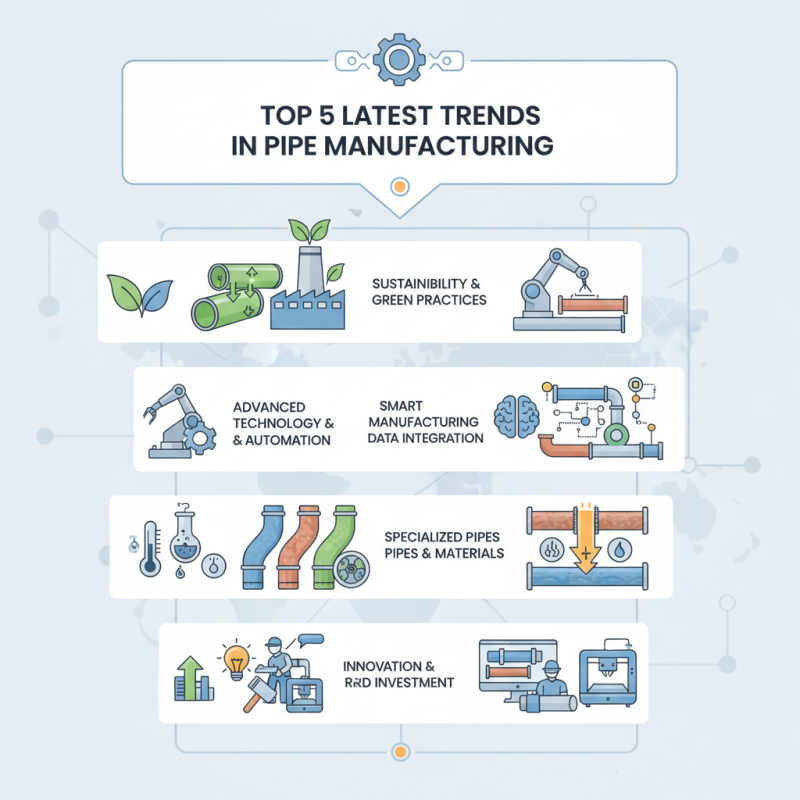
In today’s rapidly evolving industrial landscape, it is crucial to stay informed about what are the latest trends in pipe manufacturing. Companies are increasingly focusing on innovative techniques to enhance efficiency and sustainability. With growing environmental concerns, manufacturers are adopting green practices. These include using recyclable materials and reducing waste during production.
Advanced technology is reshaping the industry as well. Automation and smart manufacturing are gaining traction, promoting precision and reducing human error. However, these changes can be challenging. Traditional methods may clash with modern techniques, leading to resistance within the workforce. Companies must navigate this transition carefully, balancing innovation with the need for experienced craftsmanship.
Moreover, the market’s demand for specialized pipes is rising. Industries seek solutions tailored to specific conditions, such as extreme temperatures or corrosive environments. This demand drives manufacturers to invest in research and development. However, staying ahead in this competitive field requires constant adaptation. It’s an ongoing learning process, and not all strategies will succeed. Embracing change while remaining grounded can define a company’s future in pipe manufacturing.
Emerging technologies in pipe manufacturing are reshaping the industry. Recent studies show that the global market is projected to grow at a CAGR of 4.5% from 2023 to 2030. This growth is driven by the increasing demand for durable and efficient piping solutions.
3D printing is gaining traction in the sector. This technology allows for on-demand production of customized pipes. Reports suggest that 3D printing can reduce material waste by up to 60%. Additionally, the adaptability of designs can lead to more innovative applications. However, the challenge lies in the balance of production speed and cost-efficiency.
Another significant trend is the use of smart materials. These materials improve resilience and functionality. They can respond to environmental changes, enhancing the performance of piping systems. Research indicates that smart materials can extend the lifespan of pipes by 30%. Yet, the integration of these advanced materials requires substantial investment and expertise. Hence, many manufacturers may hesitate to adopt such innovations fully.
: Sustainable materials reduce environmental impact and can offer robust performance, promoting a greener future.
Recycled plastics and bio-based polymers are durable alternatives that help reduce reliance on fossil fuels.
Evaluate suppliers' sustainability commitments and seek out certifications ensuring responsible sourcing practices.
Reducing energy consumption lowers carbon footprints and supports sustainable manufacturing practices.
3D printing allows for complex designs, enhancing efficiency and customization, but quality control remains a challenge.
Job displacement and the need for technical training pose challenges as workers adapt to advanced systems.
Analyzing production data helps identify inefficiencies and enables predictive maintenance to prevent costly downtimes.
Embracing sustainability involves continuous investment in research and reflection on long-term impacts.
Biodegradable materials offer environmental benefits, but balancing performance with ecological impact is crucial.
Ensuring workers develop skills for advanced systems is essential, yet often overlooked during the transition.
In recent years, the pipe manufacturing industry has undergone significant transformations, driven by technological innovations and a growing emphasis on sustainability. One of the key focuses is on emerging technologies that enhance production efficiency and product quality. Sustainable materials and eco-friendly practices are also gaining traction, as manufacturers strive to reduce their environmental impact while meeting regulatory standards.
Additionally, innovations in pipe design are enhancing durability and performance, making pipes more resilient to various applications. Automation and smart manufacturing techniques are revolutionizing the industry, enabling faster production times and reduced labor costs. Collectively, these factors highlight what are the latest trends in pipe manufacturing, showcasing a shift towards greater efficiency, sustainability, and advanced engineering in the global market.

 Flowtera Pipe